Pages

Wednesday, September 28, 2016

Lawyer vs. Marine Biologist

For the first Action Project of the STEAM course, Economics, we were tasked to look at our futures. We had to think about what we want to do with our lives post high school. That included looking at the college route vs the no college route, thinking about how much it would cost to go to college to obtain the degree that we need, figuring out how much money we would make in our chosen profession over 40+ years, etc. Something we looked at a lot in this unit was opportunity cost and money. This means how long things take and comparing that to other things you could be doing. This goes into the project quite a bit because we had to choose if we wanted to spend time and money in college or just heading straight into our career. Something I struggled with was choosing a career. I have so many ideas about what I want to do with my life after high school. I finally decided to choose two different careers and see which one would be most beneficial.
__________________________________________________________________

The question “What do you want to be when you grow up?” sits in the mind of most teenagers. Next year I will either attend Harvard Law School or The University of California Santa Barbara to study how to become either a lawyer or a marine biologist. Marine Biologists work with the things happening in the water. That includes oceans, rivers, lakes, etc. They work to keep the water clean and make sure all the living things are healthy. Lawyers are the ones that defend/prosecute people in court. They work in the courts working on cases of all topics and making sure everything is just and fair for people.

I chose these two occupations because I have always been interested in the ocean as well as law. My uncle is a lawyer so I have learned a lot of things from him about what it’s like to work in this profession. I have always loved to swim and learn more about the different animals in the water. I am super interested in both of these careers. In order to become a marine biologist I would need 4-10 years in college ( 4 years for a bachelor's degree, an (optional) master’s degree or PhD). In order to become a lawyer I would need 7-8 years in college (4 years for a bachelor's degree;following that is law school for 3-4 years).

College is extremely expensive. The cost of Harvard Law in 2015-2016 was $57,200. The cost of Harvard Law in 2016-2017 was $59,550. The tuition percent increase is 4%. After going to school for four years, the cost would be $263691.43. The cost of University of California Santa Barbara in 2015-2016 was 24,708. The cost of University of California Santa Barbara in 2016-2017 was $26,682. The tuition percent increase is 8% After going to this school for 4 years the total amount of money I would be paying would be $192,254.87


Reference Data
Beginning Balance$263,691.43
APR5
Annual Salary$74,880.00
Annual Payment$22,464.00
(2016)


Year
Beginning Balance
Payment
Interest Rate
Interest Paid
Principal Paid
Ending Balance
1
$263,691.43
$22,464.00
5.00%
$13,184.57
$9,279.43
$254,412.00
2
$254,412.00
$22,464.00
5.00%
$12,720.60
$9,743.40
$244,668.60
3
$244,668.60
$22,464.00
5.00%
$12,233.43
$10,230.57
$234,438.03
4
$234,438.03
$22,464.00
5.00%
$11,721.90
$10,742.10
$223,695.93
5
$223,695.93
$22,464.00
5.00%
$11,184.80
$11,279.20
$212,416.73
6
$212,416.73
$22,464.00
5.00%
$10,620.84
$11,843.16
$200,573.56
7
$200,573.56
$22,464.00
5.00%
$10,028.68
$12,435.32
$188,138.24
8
$188,138.24
$22,464.00
5.00%
$9,406.91
$13,057.09
$175,081.15
9
$175,081.15
$22,464.00
5.00%
$8,754.06
$13,709.94
$161,371.21
10
$161,371.21
$22,464.00
5.00%
$8,068.56
$14,395.44
$146,975.77
11
$146,975.77
$22,464.00
5.00%
$7,348.79
$15,115.21
$131,860.56
12
$131,860.56
$22,464.00
5.00%
$6,593.03
$15,870.97
$115,989.59
13
$115,989.59
$22,464.00
5.00%
$5,799.48
$16,664.52
$99,325.07
14
$99,325.07
$22,464.00
5.00%
$4,966.25
$17,497.75
$81,827.32
15
$81,827.32
$22,464.00
5.00%
$4,091.37
$18,372.63
$63,454.68
16
$63,454.68
$22,464.00
5.00%
$3,172.73
$19,291.27
$44,163.42
17
$44,163.42
$22,464.00
5.00%
$2,208.17
$20,255.83
$23,907.59
18
$23,907.59
$22,464.00
5.00%
$1,195.38
$21,268.62
$2,638.97
19
$2,638.97
$2,770.92
5.00%
$131.95
$2,638.97
$0.00
20
$0.00
$0.00
5.00%
$0.00
$0.00
$0.00
21
$0.00
$0.00
5.00%
$0.00
$0.00
$0.00


True Cost of College
$143,431.49

$407,122.92
Law (2016)


Reference Data
Beginning Balance$129,817.30
APR5
Annual Salary$39,700.00
Annual Payment$11,910.00
(2016)


YearBeginning BalancePaymentInterest RateInterest PaidPrincipal PaidEnding Balance
1$129,817.30$11,910.005.00%$6,490.87$5,419.13$124,398.17
2$124,398.17$11,910.005.00%$6,219.91$5,690.09$118,708.07
3$118,708.07$11,910.005.00%$5,935.40$5,974.60$112,733.48
4$112,733.48$11,910.005.00%$5,636.67$6,273.33$106,460.15
5$106,460.15$11,910.005.00%$5,323.01$6,586.99$99,873.16
6$99,873.16$11,910.005.00%$4,993.66$6,916.34$92,956.82
7$92,956.82$11,910.005.00%$4,647.84$7,262.16$85,694.66
8$85,694.66$11,910.005.00%$4,284.73$7,625.27$78,069.39
9$78,069.39$11,910.005.00%$3,903.47$8,006.53$70,062.86
10$70,062.86$11,910.005.00%$3,503.14$8,406.86$61,656.00
11$61,656.00$11,910.005.00%$3,082.80$8,827.20$52,828.80
12$52,828.80$11,910.005.00%$2,641.44$9,268.56$43,560.24
13$43,560.24$11,910.005.00%$2,178.01$9,731.99$33,828.25
14$33,828.25$11,910.005.00%$1,691.41$10,218.59$23,609.67
15$23,609.67$11,910.005.00%$1,180.48$10,729.52$12,880.15
16$12,880.15$11,910.005.00%$644.01$11,265.99$1,614.16
17$1,614.16$1,694.875.00%$80.71$1,614.16$0.00
18$0.00$0.005.00%$0.00$0.00$0.00
19$0.00$0.005.00%$0.00$0.00$0.00
20$0.00$0.005.00%$0.00$0.00$0.00
21$0.00$0.005.00%$0.00$0.00$0.00
True Cost of College$62,437.57$192,254.87
M.Biology (2016)


For a career in marine biology, it would take me 17 years to pay off all of my student loans. The true cost of my college education would be $192,254.87. I would have paid $62,437.57 in interest. For a career in law, it would take me 19 years to pay off all my student loans. The true cost of my college education would be $264,926.04. I would have paid $143,431.49 in interest (see the charts above).


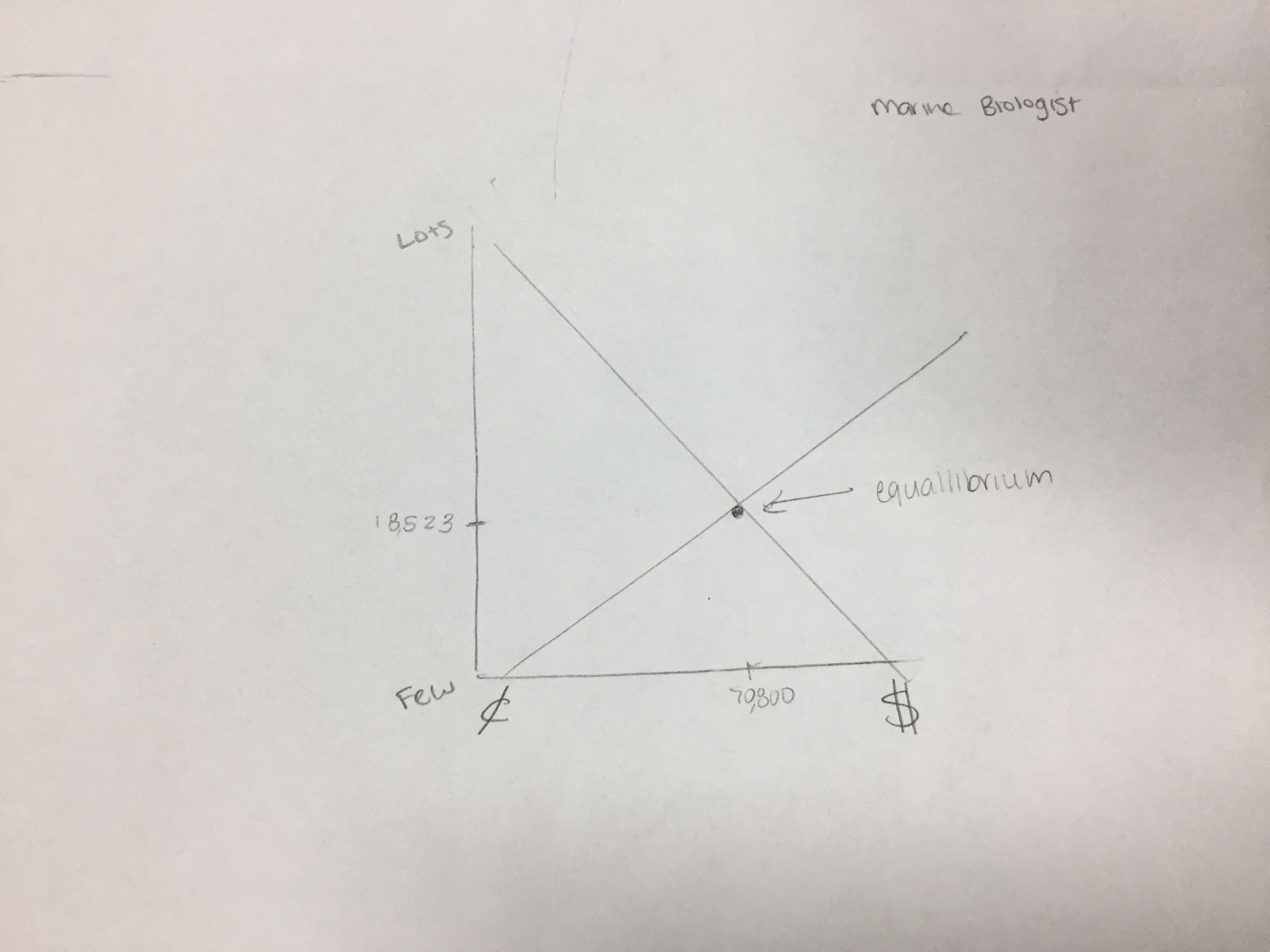
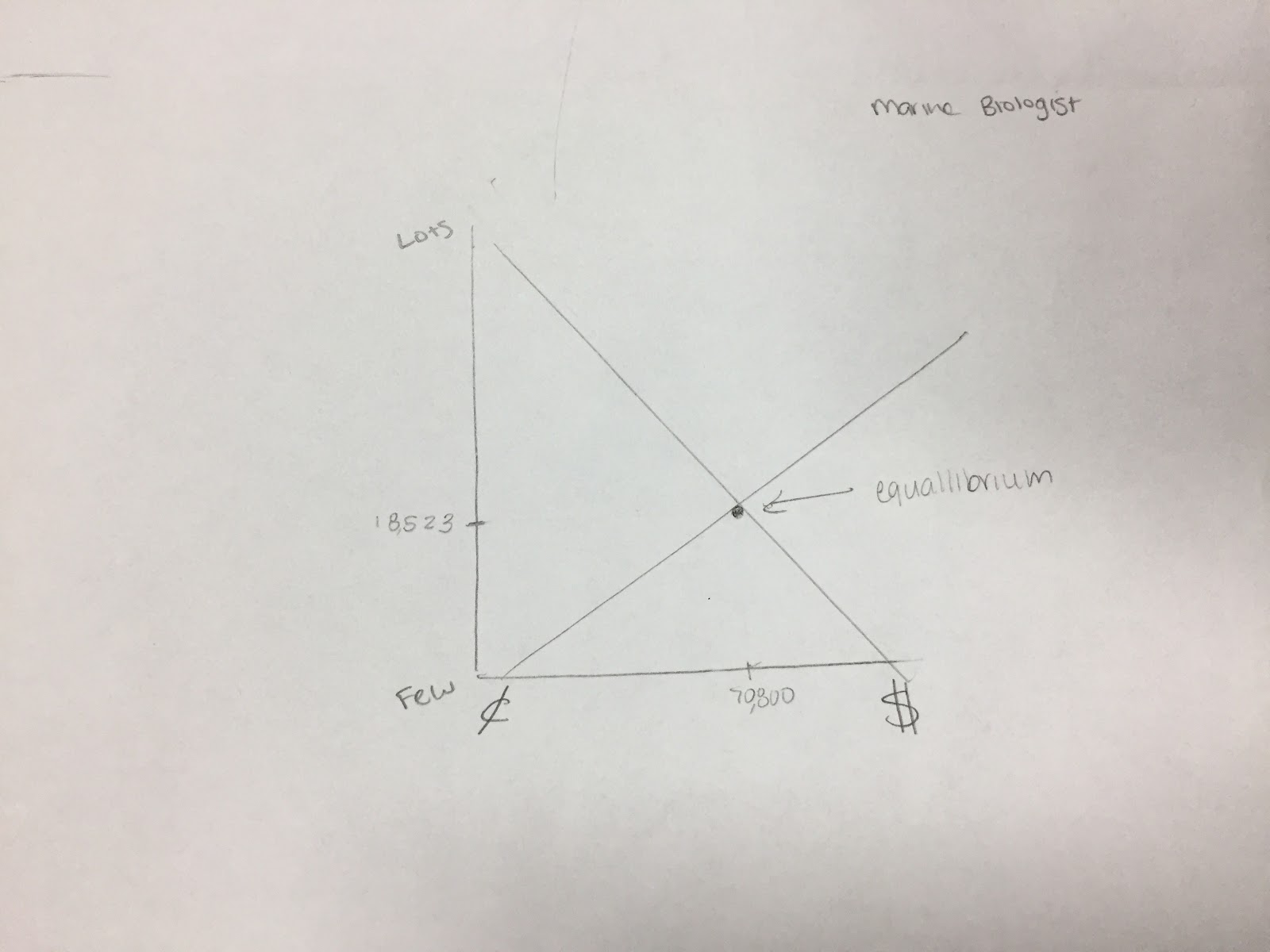
For a career in marine biology, the salary ranges. The minimum salary is $39,700 the max is $124,680 and the median is $70,800. For a career as a lawyer the minimum salary is $74,880 the max is $187,199 and the median is $130,880. By the time I retire, if I am to go into marine biology, I would make $3,874,552. If I go into law, I would make $6,512,444. For marine biology, I would be paying my student loans back one year less than if I went into law but I would be paying more interest. Right now there are 1,300,705 lawyers in the U.S. and only 18,523 marine biologists. The outlook rate is going up for both with lawyers leading with a 10% increase rate and marine biology having a 7% increase.

Reference Data
Entry-level Salary$74,880
Mid-level Salary$130,880
Senior-level Salary$187,199
Annual Raise (%)3.00%
(2016)


Career Level
# of Working Year
Year
Annual Salary
Entry
1
2021
$39,760
Entry
2
2022
$39,772
Entry
3
2023
$39,783
Entry
4
2024
$39,795=
Entry
5
2025
$39,807
Mid
6
2026
$71,013
Mid
7
2027
$71,034
Mid
8
2028
$71,055
Mid
9
2029
$71,077
Mid
10
2030
$71,098
Mid
11
2031
$71,119
Mid
12
2032
$71,141
Mid
13
2033
$71,162
Mid
14
2034
$71,183
Mid
15
2035
$71,205
Mid
16
2036
$71,226
Mid
17
2037
$71,247
Mid
18
2038
$71,269
Mid
19
2039
$71,290
Mid
20
2040
$71,312
Mid
21
2041
$71,333
Mid
22
2042
$71,354
Mid
23
2043
$71,376
Mid
24
2044
$71,397
Mid
25
2045
$71,419
Mid
26
2046
$71,440
Mid
27
2047
$71,461
Mid
28
2048
$71,483
Mid
29
2049
$71,504
Mid
30
2050
$71,526
Senior
31
2051
$125,996
Senior
32
2052
$126,034
Senior
33
2053
$126,071
Senior
34
2054
$126,109
Senior
35
2055
$126,147
Senior
36
2056
$126,185
Senior
37
2057
$126,223
Senior
38
2058
$126,261
Senior
39
2059
$126,299
Senior
40
2060
$126,336
Senior
41
2061
$126,374
Senior
42
2062
$126,412
Senior
43
2063
$126,450
Senior
44
2064
$126,488
Senior
45
2065
$126,526


Total Lifetime earnings

$3,874,552
M. Biology (2016)

Reference Data
Entry-level Salary$39,700
Mid-level Salary$70,800
Senior-level Salary$124,680
Annual Raise (%)3.00%
(2016) 


Career Level
# of Working Year
Year
Annual Salary
Entry
1
2021
$74,992
Entry
2
2022
$75,015
Entry
3
2023
$75,037
Entry
4
2024
$75,060
Entry
5
2025
$75,082
Mid
6
2026
$131,273
Mid
7
2027
$131,313
Mid
8
2028
$131,352
Mid
9
2029
$131,391
Mid
10
2030
$131,431
Mid
11
2031
$131,470
Mid
12
2032
$131,510
Mid
13
2033
$131,549
Mid
14
2034
$131,589
Mid
15
2035
$131,628
Mid
16
2036
$131,668
Mid
17
2037
$131,707
Mid
18
2038
$131,747
Mid
19
2039
$131,786
Mid
20
2040
$131,826
Mid
21
2041
$131,865
Mid
22
2042
$131,905
Mid
23
2043
$131,944
Mid
24
2044
$131,984
Mid
25
2045
$132,023
Mid
26
2046
$132,063
Mid
27
2047
$132,103
Mid
28
2048
$132,142
Mid
29
2049
$132,182
Mid
30
2050
$132,222
Senior
31
2051
$189,175
Senior
32
2052
$189,231
Senior
33
2053
$189,288
Senior
34
2054
$189,345
Senior
35
2055
$189,402
Senior
36
2056
$189,459
Senior
37
2057
$189,515
Senior
38
2058
$189,572
Senior
39
2059
$189,629
Senior
40
2060
$189,686
Senior
41
2061
$189,743
Senior
42
2062
$189,800
Senior
43
2063
$189,857
Senior
44
2064
$189,914
Senior
45
2065
$189,971


Total Lifetime earnings

$6,512,444
Law (2016)

FullSizeRender 2.jpg
Supply and Demand MB (2016)


FullSizeRender 3.jpg
Supply and Demand Law (2016)
I would be in the law industry and the science industry. The future outlook for lawyers is about 10% (projected to grow 6% by 2024). The future outlook for marine biologists is 7% (projected to grow 1.3% each year from 2010-2020). Currently, there is a 0.7% population change in the U.S. Lawyers continue to be needed so there isn’t a drop in that field. The demand for marine biologists has been increasing lately especially for female marine biologists since there are not that many female scientists out there currently. There is an option for both careers for advanced degrees. For law, once you obtain a bachelor’s degree at the 4-year college, you move on to law school and that can range from 3-4 extra years. For marine biology, after the bachelor’s, you can get a PhD or a master’s degree.


Some benefits from these two jobs are:
-Great job
-Something I am super passionate about
-Lots of money
-Great job outlook
-Prestigious colleges


I have decided that it would be most beneficial for me to become a lawyer. Some assumptions I made were that I would get into the school of my choice, get into the law program since it is very competitive, and that I would be able to get a job right out of college.  When looking at lawyer, I figured that the mastery I would gain throughout my many years of schooling would make getting the job so much more satisfying because it opens a lot of doors to work with different people on different cases that I am passionate and care a lot about. I realized that a dollar today is worth more tomorrow because the interest rates for paying back students loans changed the price so quickly in just a matter of days. Interest is something that came into play a lot with this project. Based on my graphs, I really had to think about which choice I would be willing to pay for.  Another thing that I realized was that  Throughout this job search, I realized I really a passionate about a lot of things and the ocean is just one of them and by being a lawyer, I would be able to work on cases for all of the things I am interested in. Interest rates change the price you have to pay back very drastically. College is also extremely expensive but student loans help out with that even though they are a pain to pay back.


__________________________________________________________________________________

Sources:
American Bar Association. "Briefs: Lawyer Demographics, Detroit ADR." Alternatives to the High Cost of Litigation Alt High Cost Litig 4.11 (1986): 6-7. American Bar Association, 2015. Web. 27 Sept. 2016.


Bureau of Labor Statistics. "Summary." U.S. Bureau of Labor Statistics. U.S. Bureau of Labor Statistics, 17 Dec. 2015. Web. 27 Sept. 2016.

"Careers in Marine Biology." - SWFSC. Southwest Fisheries Science Center, 6 Nov. 2015. Web. 27 Sept. 2016.

"Cost of Attendance." - UCSB Office of Financial Aid and Scholarships. University of California, 2015. Web. 27 Sept. 2016.
@exciteonlineedu. "How to Become A Lawyer, Becoming A Lawyer." Excite Education. Mindspark, 2001. Web. 27 Sept. 2016.

"How to Become a Marine Biologist." How to Become a Marine Biologist. N.p., 2016. Web. 27 Sept. 2016.

Mahuron, Sara. "Is It Hard to Find a Job as a Marine Biologist?" Our Everyday Life. StudioD, 2016. Web. 27 Sept. 2016.

Thursday, May 26, 2016

Loving v Virginia

In the last unit of the Policy class, we focused on the Judicial branch of the government. We looked into what makes up that section of our U.S. government and how someone gets appointed to that position. This wrapped up the policy aspect of this class because we ties it all together with the people that decide the fate of people that disobey the laws. They are the ones who are able to explain the laws. For the last action project of my junior year we were asked to research a supreme court case and look at the verdict and create an opinion on it. I decided to chose the Loving v. Virginia case which debated interracial marriage. I decided this because once I read about this case I was very interested because I think it holds a lot of ties to things that are going on in the U.S. right now with LGBT laws and things like that.  It was challenging to pick a case in the beginning since there have been so many but I am happy I chose the Loving v. Virginia case. I am very proud of the way my project came out. I found a lot of good information on my case and I was able to put together a thoughtful argument.


Redesigning Milan

In the last unit of the Urban Planning course we looked at the basics of urban planning in more depth. We focused more on the infrastructure and design part of the urban planning of actual places. We looked at a bunch of different cities and saw how they changed over time to become the way that they are now. For the action project in this unit, we were asked to pick an area of a city of our choice that we wanted to redesign. Something that was difficult for me in this project was picking the area I wanted to redesign. There are so many places around the world that I could have chosen. I am glad that I decided to do Milan, Italy because it is one of my favorite places. I am proud of the way my project came out.


Redesigning Milan


I will be redesigning Milan, Italy, specifically il duomo di Milano. It is the center area of Milan and holds its biggest church in the center of the piazza. It gets millions of visitors a month and the church is a big symbol in/for Milan. The strengths of this area are that it’s a big open space, there are many shops surrounding it, and it is well-known so there are lots of people. The weaknesses are that there is no greenery. It is all concrete. This space needs more trees and maybe a fountain in the center in front of the Duomo. I want to add a fountain to make it more interesting, add more trees to make it more green and make it more pleasing, and widen the sidewalk since there are so many tourists the sidewalks get pretty crowded. Widening them would help a lot, adding a green space rather than just concrete would give people a place to sit other than just on the concrete, and creating a bike path so bikers are safe from all of the traffic.

Before. MF, 2016
My fountain was inspired by the Trevi fountain that is located in the heart of Rome. I like that there is a piece in the middle to make the fountain look more extravagant. I also think that, like some parts of Chicago, I want to have sectioned off bike paths in the streets. I also want to kind of mirror the greenery that is in Central park in New York. The Conservatory Garden blooms every year and I want there to be some kind of flowers in his space to make the space more pleasing to the eye.  I was also inspired by Majora Carter who said that adding in green spaces would help brighten up the area. 

After. MF, 2016
My redesigned space relates to transportation because I created a bike path so that bikers were safer and could worry less about getting injured by a car. I also wanted to fix up the concrete so that there weren’t so many holes in it. I also created a large green space so that the space was not all concrete and it had some kind of greenery. This redesign would benefit the infrastructure of the area a lot because the concrete was becoming very dirty and no one was doing anything about it so having grass put in would make it more appealing. Adding a bike lane would benefit the transit in Milan because it would give bikers a safe place to ride and give the cars back their space so they can drive without worrying about hitting bikers.

The shape of the area I am redesigning is a rectangle that is 450m by 500m. It has an area of 225,000 meters². The volume of the sphere in the middle of the fountain is 28235.1 meters³. I found this by figuring out that the diameter of my sphere is 47.6. I then divided that by 2 to find the radius which is 23.8. Then I used the volume formula for a sphere (4/3πr³) and got 56470.2 meters³. Since it is half a sphere, I divided the answer by 2 and got 28235.1 meters³. I also found that the volume of one of the cone-shaped trees is 28233.1 meters³. I found this by finding that the radius of the cone is 23.8 meters and the height is 47.6 meters. Then I did the volume formula for a cone (1/3πr²h) and got 28233.1 meters³.

It was difficult to pick the area that I wanted to change. I also wasn’t sure how I wanted to change the space to make it more friendly to transportation. I would probably pick another space to change if I was to do this again because it would be interesting to see how another space could be recreated. 

Citations:

Talk, TED. "Majora Carter." TED: Ideas worth Spreading. TED, June 2006. Web. 27 May 2016.

Moore, John. "Conservatory Garden Blooms." Central Park. Central Park, 23 Apr. 2016. Web. 27 May 2016.

Fountain, Trevi. "Your Professional Guide to the Trevi Fountain Artworks." Your Professional Guide to the Trevi Fountain Artworks. Trevi Fountain, 2015. Web. 27 May 2016.

Sunday, May 15, 2016

The Vietnam War: Was It Just?

In the second unit of the Policy class we talked about the Executive branch. We focused on the different types of people that work in the executive branch and what their jobs are. For the action project in this unit, we were asked to look into a war and decide if the war was just or not. Something that was challenging for my in this project was picking a war. There are so many wars that the U.S. have been involved in. I am proud of the way my essay came out and I think that the war I chose had a lot of interesting information that made my essay very well- written.
____________________________________________________________________

Wolfe, Frank. Protesting the Vietnam War. (1967). Flickr. Web.

The Vietnam War: Was It Just?

There are many reasons why the Vietnam war was fought, as well as many underlying reasons. The war was fought in Vietnam, Laos, and Cambodia. The main cause for fighting this war (in the beginning) was to keep France was taking back control of the Vietnamese land and to reunify Vietnam. Once they had defeated France, communism became a very pressing issue in North Vietnam The Vietnam War took place from 1955 to 1975 and involved over 21 countries including France, Japan, UK, North and South Korea, China, Soviet Union, Cuba, Cambodia (during the time of the Khmer Rouge), Australia, etc. Many of these countries were allies of the major opposing sides - North and South Vietnam. In the case of the U.S. we were allies with France so we stepped in to back them up. on March 8, 1965 to Some tactics used by the different sides were guerrilla and tunnel warfare and full-time soldiers. Tunnel warfare, in particular, was a significant feature of this war. Vietnam created hundreds of tunnels that would lead to trap doors, holding cells, etc. which were used by North Vietnamese guerrilla soldiers to get in and out of enemy territory without being detected. The south side of Vietnam wanted the entire country to become communist. The south opposed communist rule and when the U.S. saw that there was tension, we installed a government in Southern Vietnam to make sure that communism didn’t win. The Red Scare made everyone in the US afraid that communism would take over the entire world so they thought that they needed to protect their allies and any other country that they possibly could. By doing that we caused a widespread anger that caused the North and the South to go to war. We did not have a solid reason to join this war-- it was just for the Vietnamese to fight, but I don’t think that U.S. involvement can be considered just because we clearly were afraid of the possibility of communism stretching around the world, but involving ourselves and causing a lot of problems in not only Vietnam but the U.S.

The Vietnam War lasted for about 20 years, which means that there were 5 presidents that served throughout its course each of them got us more and more involved in a war that had nothing to do with us. The 5 presidents who served were, in order: John F. Kennedy, Lyndon Johnson, Richard Nixon and Gerald Ford. Beginning with Kennedy, he sent 10,000 “advisors” to train Vietnamese soldiers. Moving on to Johnson, he did quite a lot for this war. In 1964, the Gulf of Tonkin incident happened and Johnson was given the ok signal by congress to wage war. Johnson sent ground troops to Vietnam in 1965 and began Operation Rolling Thunder. In 1968, he began peace negotiations, which were continued in Paris by President Nixon, who started the retreat of the American troops right after the Vietnamisation of the war in 1969. After many violent anti-war protests, Nixon finally brought all American ground forces home Vietnam in 1971 and the Pentagon Papers were released by the Pentagon. President Johnson stated in his campaign that he would not ever send troops over to Vietnam; which he then went back on. He sent troops without an official declaration of war. In the beginning of U.S. involvement, Congress passed the Gulf of Tonkin resolution which was very important in our involvement because it started a lot of fighting after congress gave Johnson the “ok” to take any measures he deemed necessary to keep Southeast Asia (Yoshua Wuyts, What Was the Role of Each Individual President in the Vietnam War).

There were a couple policies put in place during the Vietnam war by the U.S. One of the most important policies was the draft that began on December 1, 1969 and called on all men born from 1944-1950 to participate in protect their country. President Lyndon B. Johnson proposed it so that we could have enough soldiers to serve in this army. He had previously said he would never send people to fight in Vietnam. He then was persuaded by the National Security Council to send troops without an official declaration. The National Security Council is a group that ensures the safety of all Americans and they felt that it was necessary to wage war in order to do that to their best ability. It was intended to give the U.S. more soldiers to fight in the war. There were 6,058,000 soldiers sent to Vietnam through the draft and 3,029,000 soldiers were volunteers (Bia Ku, The Vietnam War Draft).

The draft was hated by 80% of the population (Shmoop, Politics in the Vietnam War). People felt that the draft was just a way for the government to kill off a lot of people and it wasn’t fair to be forced to go out and die for their country. People became “draft dodgers,” which means that they either faked being mentally/physically ill, fled to Canada or Mexico, pretended to be gay, etc. In 1970, the draft faced its highest resistance rates ever. People began burning their draft cards, which is illegal, as a sign of protest. By 1972, 200,600 people had resisted the draft. I think that the draft was unjust. The draft was made up of 25% poor men, 55% working class men, and 20% middle class men (Bia Ku, The Vietnam War Draft). The board at the draft center would have to look through an applicant's draft status and usually would defer upper- class applicants. This is not fair because the draft forced men to go fight for something they may or may not believe in. Some people, because of their religion, did not believe in fighting in wars and were forced to because of the draft. He was initially not keen on the idea of sending troops to Vietnam, but was told by his advisors that he would be seen as a “weak and spineless president” if he didn’t send troops. He went back on his promise and ended up proposing the draft and sending over 2 million men to war. The consequences were pretty severe. The government faced a lot of backlash from the draft and people were incredibly angry about being forced to go fight and potentially die for their country. S The draft was hated by majority of the population. People felt that the draft was just a way for the government to kill off a lot of people and they thought that it wasn’t fair to be forced to go out and die for their country. People became “draft dodgers” which means that they either faked being mentally/physically ill, fled to Canada or Mexico, pretended to be gay, etc. In 1970 the draft faced its highest resistance rates ever. People began burning their draft cards which is illegal as a sign of protest. By 1972, 200,600 people had resisted the draft (Bia Ku, The Vietnam War Draft).

The Vietnam War had was fought for several underlying and immediate reasons. The war itself that was between the Vietnamese and France (which then turned into North Vietnam vs. South Vietnam) was just.France wanting to retake control of Vietnam was both unfair and unnecessary, and communism and the separation of Vietnam was a very pressing issue that scared a lot of Americans. I do not, however, support the involvement of the U.S. in this war. I think that we just nudged our way in and caused a lot more problems in both Vietnam and our own country. The U.S just jumped into a war that they weren’t meant to be in. We tried to fix something that wasn’t our job to fix. This war caused tension not only in Vietnam, but in our own country as well. It pitted people against each other and caused a giant resistance party to form because of the draft. President Johnson lost a lot of trust from the people of the U.S. after he went back on his promise and sent over 2 million men to die in a war that had nothing to do with them.

Citations:

Bia, Ku. "Vietnam War Draft - The Vietnam War." The Vietnam War. The Vietnam War, 9 May 2016. Web. 10 May 2016. <http://thevietnamwar.info/vietnam-war-draft/>.
"Guerilla Tactics: An Overview." PBS. PBS, n.d. Web. 10 May 2016. <http://www.pbs.org/battlefieldvietnam/guerrilla/>.
Shmoop Editorial Team. "Politics in The Vietnam War." Shmoop. Shmoop University, Inc., 11 Nov. 2008. Web. 10 May 2016.
"U.S. Involvement in the Vietnam War: The Gulf of Tonkin and Escalation, 1964 - 1961–1968 - Milestones - Office of the Historian." U.S. Involvement in the Vietnam War: The Gulf of Tonkin and Escalation, 1964 - 1961–1968 - Milestones - Office of the Historian. United States Department of State, n.d. Web. 10 May 2016. <https://history.state.gov/milestones/1961-1968/gulf-of-tonkin>.
War Team, The Vietnam. "From 1965 to 1973: The United States in Vietnam by Year - The Vietnam War." The Vietnam War. The Vietnam War, 18 Mar. 2014. Web. 10 May 2016. <http://thevietnamwar.info/1965-1973-united-states-vietnam-year/>.
Wuyts, Yoshua. "What Was the Role of Each Individual President in the Vietnam War?" What Was the Role of Each Individual President in the Vietnam War? Quota, 16 Mar. 2011. Web. 10 May 2016. <https://www.quora.com/What-was-the-role-of-each-individual-president-in-the-Vietnam-War>.

Thursday, May 5, 2016

Electricity: The Circuit Challenge

In the second unit of the Urban Planning class, we talked about electricity. We looked into the war of the currents and who Tesla and Edison were and what they accomplished in their lives. We looked at different equations such as Ohm’s law, Coulomb's law, etc. For the action project in this unit we were asked to build a circuit with 5 resistors, a main switch, and a parallel branch switch. Something that was difficult in doing this project was figuring out a way to have a switch that only turned off one thing. I am proud of the way my cricut came out and I think that it works very well.